Sponsored feature · Editorial standards apply · Advertising policy
Fresh Start Vitality Living brighter after sixty
Brain & Memory
Field Essay · June 2026
Field Essay · 7 min read

I Taught Piano by Ear for 38 Years. When the Names Started Slipping, a 12-Minute Sound Helped Me Find Them Again.

I could once name a student, a piece, and the year they first sat at my bench from a single wrong note down the hall. Then one afternoon a girl I'd taught for six years looked up at me — and her name simply wasn't there.

An older woman looking calm and clear-headed by a bright window
For thirty-eight years my ear never missed a thing. It took me far too long to notice what my own memory was trying to tell me.

For thirty-eight years I could sit in my studio with my back to the door and know exactly who had just walked in by the weight of their footsteps and the first chord they played. Names, pieces, recital dates — my memory was the one instrument I never had to tune. So the afternoon a student I adored looked up from the keys and her name refused to come, something in me went very still.

It had been creeping up for a while, if I'm honest. A word gone the moment I reached for it. Walking into the kitchen and forgetting the errand that sent me there. A heavy, curtain-drawn feeling by late afternoon that no cup of tea could lift. I told myself it was ordinary — that everyone loses the thread a little after sixty. That's what people kept telling me.

But I had spent a lifetime listening for the smallest thing out of place, and this did not sound like ordinary. It sounded like a note I was meant to pay attention to.

1 in 9
Adults over 45 report a self-perceived decline in memory or clear thinking that isn't explained by another condition, according to the CDC. For most of us it begins quietly — and it is remarkably easy to wave away.
01 The name that wouldn't come

My grandson works in a university lab that studies the aging brain, and one Sunday over dinner I finally said it out loud instead of laughing it off: I'd been losing names. Words. Whole trains of thought, mid-sentence. For months.

He didn't look alarmed. He looked curious. "Grandma," he said, "has anyone ever explained BDNF to you?"

He put it in terms a music teacher could love. BDNF — brain-derived neurotrophic factor — is a molecule some researchers describe as a kind of nourishment for brain cells. It helps them stay in conversation with one another, which is much of what memory and focus really are. And its levels, he told me, tend to quietly taper as we get older.

"So what brings it back up?" I asked.

"Movement. Good sleep. And — you'll like this one — there's research suggesting a particular rhythm of brain activity may encourage it. A frequency. Gamma waves."

A frequency. After a lifetime spent coaxing rhythm out of other people's hands, the thought that my own mind had a rhythm it had simply drifted away from landed somewhere I wasn't prepared for.
02 What I found when I went looking

So I did what any retired teacher with time on her hands does: I read everything I could get my glasses on. And I was surprised, because none of it was on the fringe. Researchers have spent decades charting how the brain settles into different rhythms — slow, drifting waves in deep sleep, quicker ones when we concentrate. Gamma waves are among the fastest, and they tend to appear when the mind is alert, engaged, and holding many threads at once.

The core idea. The brain doesn't run on chemistry alone — it runs on rhythm. Whole networks of cells fire together in waves, and different states of mind ride on different frequencies. Some research suggests that gently nudging the brain toward gamma-range activity may relate to the same BDNF signaling tied to learning and memory. The approach isn't a pill and isn't a gadget. It's sound — carefully composed, listened to for a few minutes a day.

That's when my grandson mentioned that a group of neuroscientists and audio engineers had built this very principle into something a person could use at home. No clinic. No prescription. A 12-minute audio track, engineered to lead the brain gently toward those gamma frequencies through layered patterns of sound. They call it The Brain Song.

Naturally, I was doubtful. I've heard more "miracle" recordings in my life than I can count. But the reasoning held together, and there was nothing to swallow and nothing to remember to take. You simply put on a pair of headphones and press play.

03 How a "song" could possibly help

Here's the picture that finally made sense to me. Strike one tuning fork, hold a second one nearby, and the second begins to ring at the very same pitch — it has no choice, it simply falls into step. The brain does something loosely similar with rhythm: given a steady, well-made pattern of sound, its own electrical activity tends to lean toward that pattern. Researchers call it entrainment. I've watched a whole room of restless children settle into the same tempo the moment a metronome starts. This wasn't so different.

🎧
A 12-Minute Daily Listen The whole routine
No program to learn, no schedule to keep up with. Headphones on, press play, and let a single short track do its work — ideally around the same time each day.
Digital audio · listen anywhere
〰️
Gamma-Range Sound Patterns
The track is layered to guide the brain, gently, toward the faster gamma rhythms that researchers link with focus, learning, and quick, connected thinking.
Grounded in modern brainwave research
🧠
The BDNF Connection Nourishment for the mind
BDNF supports healthy back-and-forth between brain cells. Some research suggests gamma activity may help encourage it — the everyday molecule sitting behind learning and memory.
Neuroscience · published research
🌤️
Calming, Not Taxing
Most people find the experience soothing rather than stimulating — something to look forward to, not one more task. Many fold it into their morning coffee or a quiet moment at dusk.
Enjoyed at home, in your own chair
Editorial note. The Brain Song is a wellness audio program, not a medical treatment. It is not intended to diagnose, treat, cure, or prevent any disease. If you are noticing significant or sudden changes in your memory or thinking, please speak with a qualified healthcare provider.
04 Three weeks by the window

I began on a Monday, with my tea and a decent pair of headphones, in the chair by the window where I used to mark recital programs. Twelve minutes. I kept notes, because thirty-eight years of writing in the margins of sheet music is a hard habit to put down.

Log · Week 1

Pleasant. Quieter in my head than I expected — like a hall going still before the first piece. Far too soon to call it anything. I wrote it down regardless.

Log · Week 2

The afternoons feel wider. That four-o'clock fog didn't roll in the way it usually does. Could be the spring light. Could be me. Either way, I noticed.

Log · Week 3

Bumped into a former student's mother at the market and her name arrived the very second I saw her — first time in ages. My daughter said I sounded quicker on the phone. I hadn't mentioned I'd changed a single thing.

I'm careful about what I'll claim. I taught music; I'm no scientist, and three weeks is only three weeks. But I feel clearer than I have in a long while, the whole routine costs me twelve quiet minutes a day, and I've no intention of giving it up.
The fog didn't lift all at once. It lifted the way a room warms at sunrise — you never catch the exact moment, you simply look up one morning and find the light already there.
Featured in this essayDigital · instant access
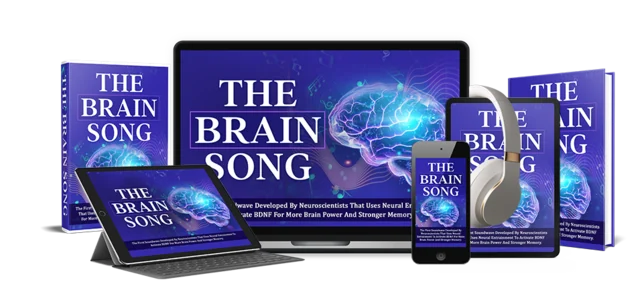
The Brain Song — digital audio program shown on laptop, tablet, phone and headphones

The Brain Song — Tune Your Brainwaves for a Sharper, Steadier Mind

★★★★★
4.7 average · 2,900+ listeners

A simple, 12-minute digital audio built where neuroscience meets sound — designed to lead the brain gently toward the gamma rhythms tied to focus, learning, and memory. Delivered instantly, backed by a 60-day money-back guarantee.

$39 / one-time · lifetime access
Instant digital download — listen today
Listen to The Brain Song
Digital audio program · results vary · 60-day money-back guarantee
🎧 Just press play⚡ Instant access↩ 60-day guarantee📱 Phone, tablet & PC

Background & further reading

  1. Brain-derived neurotrophic factor and its role in learning and memoryPMC / NCBI
  2. Gamma oscillations and their association with cognitive functionPubMed
  3. Auditory rhythmic stimulation and neural entrainment: a reviewPMC / NCBI
  4. Music, sound and the aging brain: cognitive and emotional effectsFrontiers in Neuroscience
  5. Sleep, exercise, BDNF and brain plasticity in older adultsPubMed
Reader notes
254 responses · sorted by most helpful
HB
Harold B.
Spokane, WA · ✓ Verified · 3 days ago
★★★★★

The late-afternoon fog Diane describes was my whole reality. Twelve minutes with headphones after breakfast turned into the steadiest part of my day. Three weeks along, my son said I seemed "more present" on our calls — and I hadn't told him I'd started anything.

JM
Joan M.
Asheville, NC · ✓ Verified · 5 days ago
★★★★★

I've bought pills and apps and forgotten to use every one of them. A 12-minute track I actually look forward to? That one sticks. The 3pm wall I'd made peace with started easing after a couple of weeks. Simple, and genuinely relaxing.

RF
Ray F.
Dubuque, IA · ✓ Verified · 1 week ago
★★★★☆

Retired accountant, lifelong doubter. Came in expecting nothing and it's been playing every morning for two months. Can't hand you a brain scan — can tell you my word-finding is noticeably better. Four stars and a permanent spot in my routine.

SC
Sandra C.
Modesto, CA · ✓ Verified · 1 week ago
★★★★★

I set it up for my husband of 73 without making a fuss about it. Three weeks later he phoned me from the hardware store — he'd remembered the whole list without his phone, first time in ages. He puts the headphones on himself now. Had to tell someone.